
Misogyny is not funny: Challenging normalized disrespect toward women
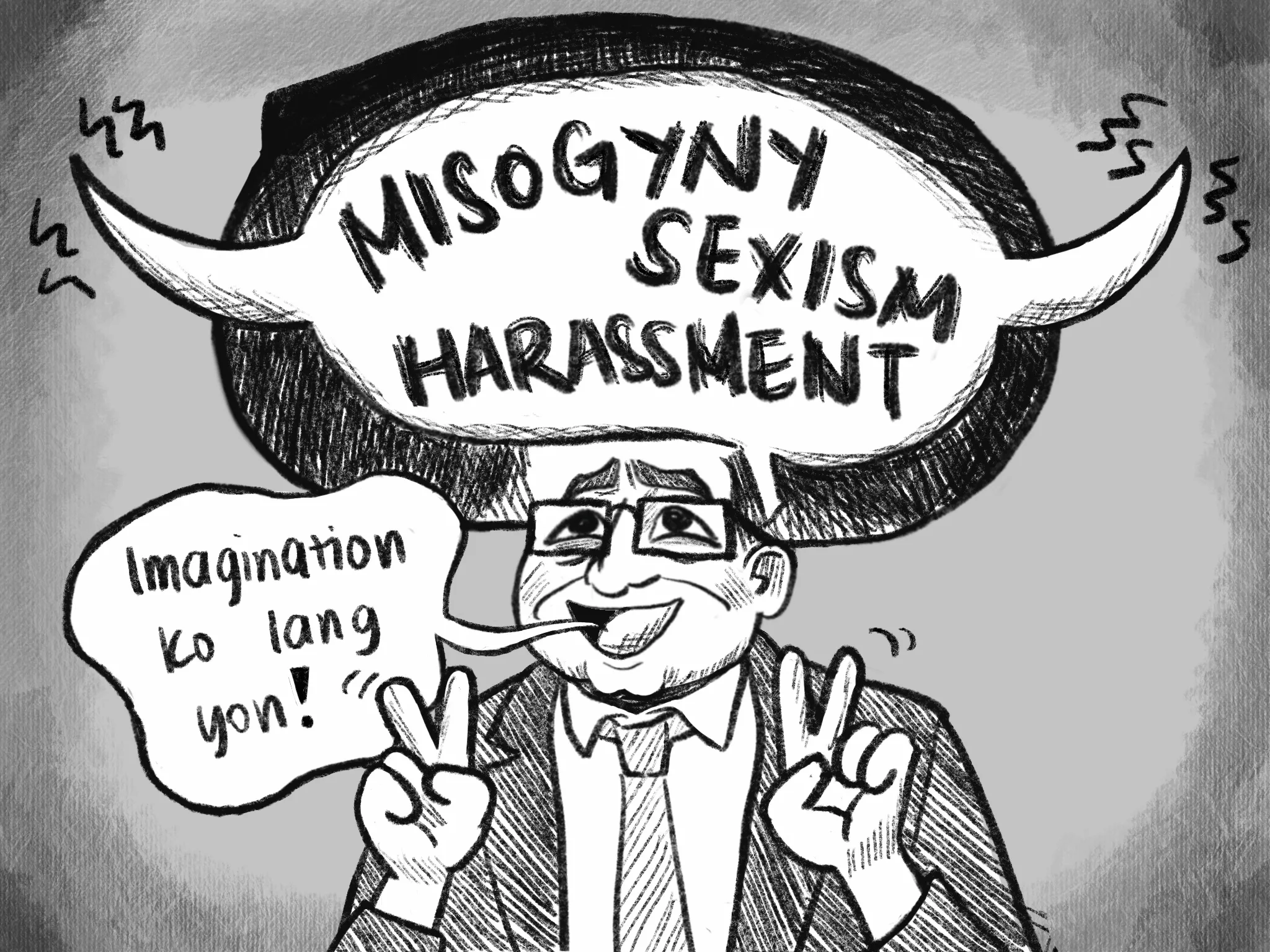
The recent online debate triggered by Quezon City 4th District Representative Bong Suntay's comments about Filipina celebrity Anne Curtis has reignited an important conversation about the casual disrespect women often face in the public eye. The issue started on March 3, 2026, during a House Committee on Justice hearing about the impeachment complaints against Vice President Sara Duterte. During the discussion, Suntay used Curtis as an analogy to explain that imagination alone should not be considered a punishable act. He shared that after seeing the actress, he felt a strong desire and imagined what could happen, but he insisted it stayed only in his thoughts. Although the statement was dismissed as “just a joke,” it quickly went viral online and faced criticism from lawmakers, advocacy groups, and the public—especially as the country celebrates National Women’s Month, a time to honor and protect women’s dignity. This incident underscores the urgent need to address the casual objectification of women in public spaces and to hold all individuals accountable, regardless of their status.
Words carry weight, especially when spoken by people in positions of influence. During the hearing, Suntay said, "Nakita ko si Anne Curtis… may desire sa loob ko na nag-init talaga, na-imagine ko na lang kung ano’ng pwedeng mangyari, pero siyempre hanggang imagination na lang iyon.” He later argued that thoughts alone cannot be punished and that his statement should not be taken maliciously. However, many critics pointed out that such remarks shift attention away from serious discussion and reinforce the objectification of women.
Even if framed as an analogy, comments that publicly narrate sexualized imaginations about a woman contribute to a culture that normalizes disrespect. In response to the controversy, Anne Curtis broke her silence to address the issue in a public statement, emphasizing that “my name [was] used without my consent, in the wrong context, and without an ounce of respect.” She further noted that the experience reflects a larger reality faced by many women, stating that “what happened to me isn’t rare. It happens to women every day.”
Various organizations and leaders emphasized why the issue matters beyond the individual involved. For instance, the Philippine Commission on Women described the comment as a form of sexual objectification that reinforces a culture of harassment toward women. In addition, Senator Risa Hontiveros reminded the public that sexist remarks may be penalized and that gender-based harassment is punishable under Republic Act No. 11313, or the Safe Spaces Act (Bawal Bastos Law). She emphasized that, as a lawmaker, Suntay is expected to know the law and uphold it. Actor groups and public figures also condemned the statement, stressing that invoking a woman in such a manner during an official government proceeding undermines women’s dignity and respect. Collectively, these reactions highlight that the conversation is not merely about one comment but about the broader cultural attitudes that continue to affect women to this day.
Moreover, people are watching. Many individuals form their values based on what they observe online and in public spaces. This is especially concerning given that harassment against women remains widespread. Globally, nearly 1 in 3 women, roughly 840 million, have experienced physical or sexual violence at least once in their lifetime. In addition, studies show that about 41% of women worldwide have experienced online harassment, highlighting how digital spaces often mirror real-world discrimination. When disrespectful language goes unchecked, it silently teaches others that such behavior is acceptable. In contrast, addressing it calmly and constructively sends a powerful message that respect is non-negotiable.
This issue should not just be about canceling individuals or fueling hostility online. Instead, it should promote reflection from everyone. No matter one’s status or platform, every person has the responsibility to communicate respectfully. While freedom of expression is essential in a democratic society, it should never be used as an excuse for speech that diminishes others.
As National Women’s Month continues, let it remind us of the work that still lies ahead. Celebrating women goes beyond symbolic gestures or annual observances. To celebrate women is to defend their dignity, stand guard over their worth, and honor their contributions every single day of the year. Equality is not seasonal; it is a commitment that must be practiced daily in the words we choose and the platforms we build.