
Hooked on Junk
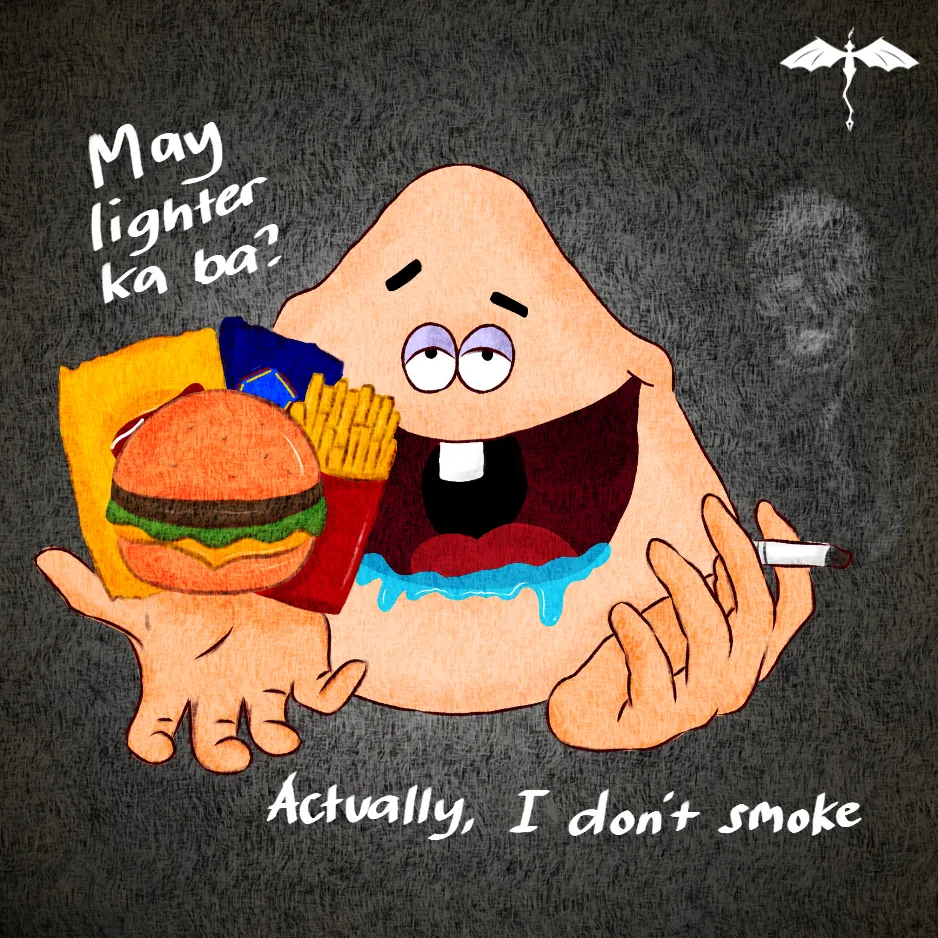
What do junk food and cigarettes have in common? Quite a lot, actually. Both are often used for comfort and stress relief, but they come with serious health consequences. The main distinction has been that nicotine products are widely recognized as addictive and hard to quit. However, what if that distinction isn't as clear as we think?
Ultraprocessed foods (UPFs) are defined under the NOVA food classification system, which was developed in Brazil to categorize foods based on the extent of their processing rather than their nutritional content. This system divides foods into four groups: unprocessed or minimally processed foods, processed culinary ingredients, processed foods, and ultraprocessed foods. UPFs are the most heavily processed, often made using industrial methods, and contain added flavorings, preservatives, and other ingredients not typically found in home cooking. Common examples include sodas, chips, cookies, crackers, candy, ready-to-eat meals, and processed meats. Many of these items are commonly referred to as junk food, highlighting a significant overlap between UPFs and everyday food choices.
UPFs are designed to make people want to eat more of them repeatedly. They are easy to store, carry, and prepare, making them a convenient part of daily life. Companies often mix ingredients like sugar and fat to create foods that taste delicious and feel satisfying. To enhance their appeal, UPFs often include added flavors, sweeteners, colors, and other ingredients. Because these ingredients are easy for the body to break down, they are absorbed quickly, providing a fast reward that fades just as rapidly, leading to cravings for more. Even foods labeled as "low-fat," "sugar-free," or "with added vitamins" can have these effects. While not all ultraprocessed foods are equally harmful, those high in sugar and fat are usually the most difficult to resist and can be the unhealthiest when consumed often.
Nicotine products, such as cigarettes and vapes, are created in similar ways. They are designed to provide a quick and satisfying effect, with carefully controlled doses of nicotine that keep users coming back for more. Nicotine is rapidly delivered to the body, producing a short-lived feeling that quickly diminishes, encouraging repeated use. These products also contain additives and flavorings to enhance their appeal. They are convenient and easy to use at any time, making them even harder to avoid. Some are advertised as safer than they actually are, such as vapes, which were once promoted as a less harmful alternative to smoking, despite carrying similar health risks. Like UPFs, nicotine products come with varying levels of risk, but all can be harmful when used regularly. This comparison between UPFs and nicotine products is supported by a 2026 study by Gearhardt et al.
To address this issue, it is proposed that the same policy tools used to reduce tobacco-related harm be applied to UPFs. These tools include stopping marketing aimed at teens, implementing taxes to make unhealthy foods more expensive, improving labeling so consumers know what’s in their food, limiting sales in schools and hospitals, and even pursuing legal action against companies that violate these policies. Such measures focus not only on personal choices but also on how products are promoted and made accessible to the public.
An example of this is the Philippines' Republic Act No. 9211, also known as the Tobacco Regulation Act of 2003. This law controls tobacco use by banning smoking in public places, restricting advertising, setting 18 as the minimum age to purchase tobacco, and requiring prominent health warnings on cigarette packs. Similar laws could be adapted for UPFs, helping to reduce their harmful effects on people's health and making it easier to choose healthier options.
UPFs are not only appealing but can be as addictive as nicotine. With sugar, fat, and flavorings that provide a quick hit that vanishes, it’s easy to understand why getting hooked is simple yet stopping is challenging. Without precautions regarding UPFs, we might start to wonder whether we are still in control of what we eat or if our food is starting to choose for us.